
Share:
A blog for Catholic men that seeks to encourage virtue, the pursuit of holiness and the art of true masculinity.
Biblical Masculinity: Why a Husband Must Protect His Wife and Family
December 30, 2025
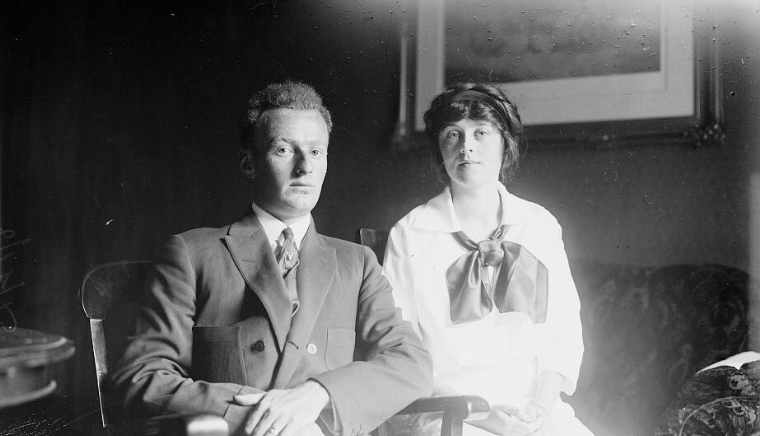
A Husband as Protector: The Offensive Center of the Family
A husband is like the center on a football team’s offensive line. More than merely snapping the ball to the quarterback, his duty is to sacrifice his body to protect the quarterback from the defensive linemen. He creates a pocket of space that gives the quarterback the time and freedom to move the ball downfield.
Like the offensive center, a husband defends his wife and children. He creates a pocket of “space” between his family and the world, the flesh, and the devil. He does not wait until the enemy is at the doorstep; rather, he runs out to meet him in battle. His defense is a tactical, relentless offense—one that wages war against that which he holds most sacred. His purpose is to push evil forces away from his family.
When the Center Fails
An offensive center who is injured, unfocused, weakened in determination, addicted to painkillers or narcotics, or simply trying to get through the game places the quarterback at risk. Likewise, a husband who is distracted by the world, consumed by the pursuit of riches, bought off by fleshly and sedating pleasures, or merely going through the motions will inevitably allow his wife and children to be sacked and plundered by the evil one.
Why Safety Matters for a Wife
Psychologists and neuroscientists have discovered that women thrive when they produce ample amounts of oxytocin. Numerous studies in psychology and neuroscience support oxytocin’s role in bonding, trust, stress reduction, and emotional regulation (see overview from the Cleveland Clinic: https://health.clevelandclinic.org/oxytocin). Oxytocin is both a hormone and a neurotransmitter, often called the “love hormone” or “cuddle hormone.” It is essential for social bonding, trust, empathy, and stress reduction. It also plays vital roles in childbirth—stimulating uterine contractions—and in lactation through milk let-down. Produced in the hypothalamus, oxytocin is released during physical touch, eye contact, sexual intimacy, and childbirth, fostering feelings of connection and well-being in both men and women (WebMD summary: https://www.webmd.com/sex-relationships/what-to-know-about-oxytocin).
When a woman is stressed, feels unsafe, or relives trauma, her cortisol levels spike. Elevated cortisol is widely documented to interfere with bonding hormones and increase inflammation and anxiety (American Psychological Association overview: https://www.apa.org/topics/stress/body). Cortisol inhibits oxytocin receptors, leading to symptoms such as fatigue, body aches, migraines, weight gain (especially abdominal fat), anxiety, and depression. Higher levels of oxytocin, by contrast, are associated with increased fertility, greater happiness, and improved immune regulation, as discussed in clinical and behavioral research (National Institutes of Health overview: https://www.ncbi.nlm.nih.gov/pmc/articles/PMC3183515/).

The Mirror Effect
The question, then, is this: do you, the offensive center, protect your quarterback, or do you allow the enemy access to her? Is she stressed or calm? Anxious or joyful?
A wife can be a mirror for her husband. By observing her state of being, he can often discern his own spiritual and emotional health. Oxytocin is released through proper physical touch—hugs, caresses, massages—as well as through eye contact and pleasant social interaction. It also plays a vital role in male sexual function and bonding.
Warrior and Lover
The offensive center must be fearless in battle against the enemy, yet tender-hearted with his wife. These qualities are not mutually exclusive. The real man is both a warrior and a lover.
Yet some men treat their wives as the enemy and the world as an accomplice: they wage war against their wives and make peace with the world.
What Stresses Wives
- An impatient or irritable husband
- A jealous husband
- An emotionally distant husband
- A dictatorial or selfish husband
- An insecure husband—either pusillanimous or overcompensating through arrogance
- An abusive, angry, or volatile husband
- A fearful and chronically worried husband
- A husband who continually brings up his wife’s past
- A distracted and preoccupied husband
- An abdicating husband who avoids conflict with the children and refuses to defend his wife
- A husband who no longer notices his wife
- A spiritually spineless man who lacks moral conviction and a devotional life
Christ as the Model
Notice that Christ embodied none of these qualities.
Jesus is patient.
Jesus is kind and empathic.
Jesus is not jealous.
Jesus is humble.
Jesus honors His Bride, the Church.
Jesus is not selfish.
Jesus forgives.
Jesus is meek.
Jesus protects His Bride.
Jesus never gives up on His Bride.
This is the scriptural definition of love, drawn from Sacred Scripture (1 Corinthians 13, NIV; BibleHub reference: https://biblehub.com/niv/1_corinthians/13.htm):
“Love is patient, love is kind. It does not envy, it does not boast, it is not proud. It does not dishonor others, it is not self-seeking, it is not easily angered, it keeps no record of wrongs. Love does not delight in evil but rejoices with the truth. It always protects, always trusts, always hopes, always perseveres.” (1 Corinthians 13)
The Danger of Extremes
There is much talk about being a ‘real man’: the warrior man, the man without emotions or sympathies, the rival of all things deemed weak. Yet this kind of polemic is a form of extremism—and extremism is the devil’s playground. Satan thrives in extremes. He despises virtue and constantly goads us toward deficiency on one side or excess on the other.
Virtue, as St. Thomas Aquinas often taught, is found in the tense center between these two extremes (see Summa Theologiae, I–II, q.64; overview: https://www.newadvent.org/summa/2064.htm). It is the most difficult path, and therefore the most necessary.
The Measure of a True Man
The true man is like Christ:
- He is not jealous, nor does he provoke jealousy in his wife.
- He is not insecure, nor does he make his wife feel insecure.
- He confronts fear and protects his wife even from his own anxieties.
- He is not emotionally distant and refuses to condition his wife to become emotionally numb.
- He is not distracted by selfish preoccupations, nor does he teach his wife to sedate herself through constant diversion.
- He notices his wife—and because she knows she is seen, she learns again to see him.
- He is faithful and trusts God, and through his faith she is strengthened in her own.
- He guards himself against the flesh, the world, and the devil, and by doing so protects his wife even from himself.
A Final Question
Are you such a man?
The salvation of your wife and your children depend on it.
Call to Action
If this reflection challenges you, do not let it end here. Examine your life honestly. Ask yourself where you have abdicated, where you have grown distracted, and where you must reclaim your post as protector.
Commit today to concrete action:
- Pray daily for your wife and children by name
- Remove habits that weaken your vigilance and resolve
- Practice intentional tenderness through presence, attention, and physical affection
- Return to the sacraments, Scripture, and disciplined spiritual life
A man does not drift into virtue. He chooses it, fights for it, and renews that choice daily.
Stand your ground. Your family is worth the fight.
Men’s group study guide available here.
Reprinted by partnership with The Fathers of St. Joseph.
COMMENTS
Reader Interactions