
Share:
A blog for Catholic men that seeks to encourage virtue, the pursuit of holiness and the art of true masculinity.
Emotion Sickness
November 12, 2026
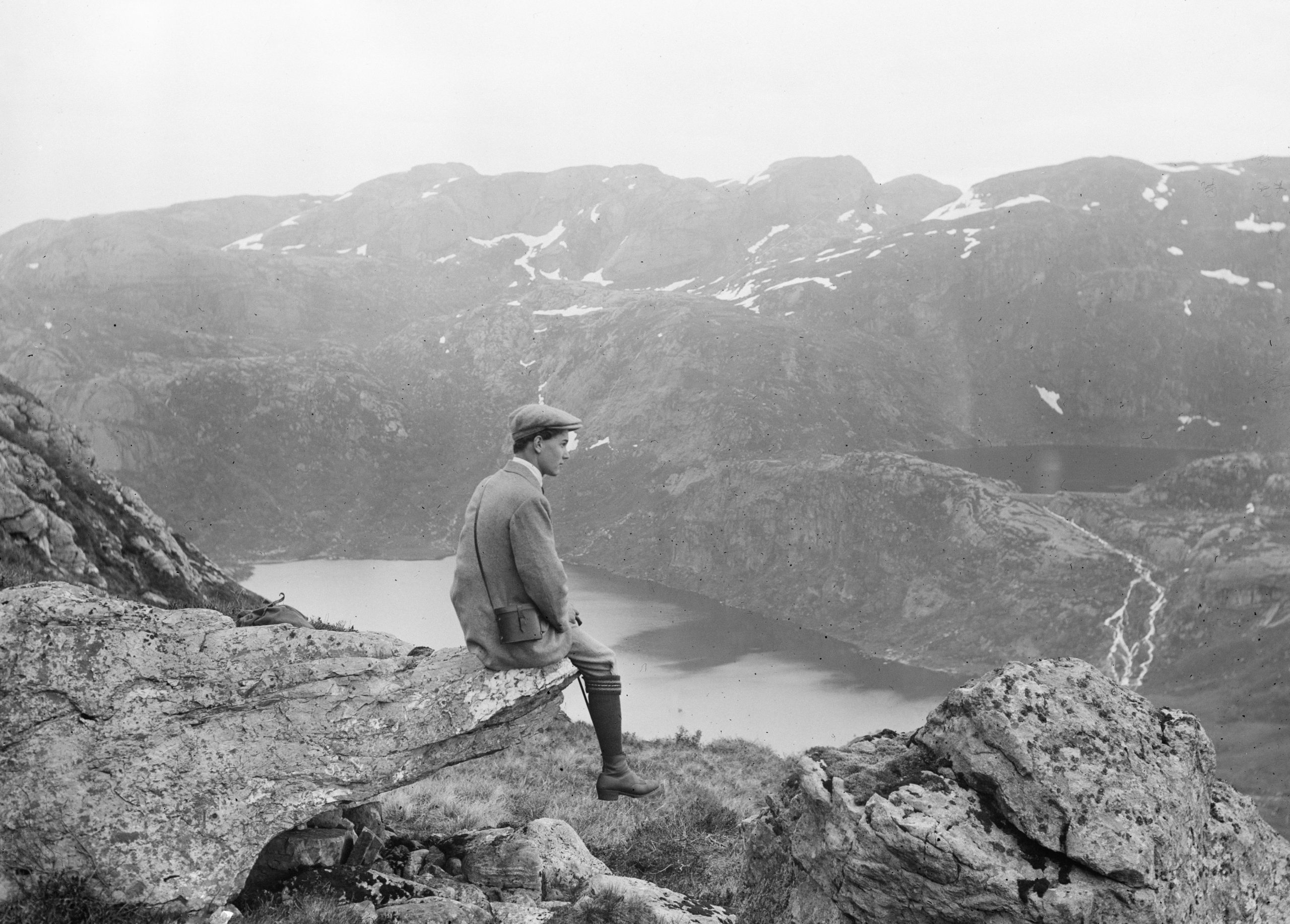
“I came from a family where the only emotion respectable to show is irritation. In some this tendency produces hives, in others literature, in me both.”
—Flannery O’Connor
Though I can’t recall having been afflicted with an emotionally induced dermatitis, I have suffered a much more significant and chronic form of inflammation from the inadequate treatment of my emotions, and I have the emotional scars to prove it. After forty-three years, I still find emotions challenging to interpret and master. I assume, Dear Reader, that you may empathize or at least commiserate. For how else can we explain the existence of hundreds of books and podcasts on the subject of emotional intelligence? Why do so many of us require professional counseling to navigate these waters? Why did God give us these confounded emotions?
My primary vocation is as husband and father; my side hustle is as a small animal veterinarian. In veterinary medicine, the suicide rate has reached an all time high which has induced a surge in literature, lectures, and support groups centered on emotional intelligence or EQ for short. To be a small animal veterinarian is a daily emotional roller coaster, where one minute you may be examining a puppy for its first well visit, and the next a beloved pet is handed over in a box, dead, to its owner of twenty years. I deal with the emotional ride of the owners, but also internally as a Catholic I have to wrestle with the ordered and disordered attachment to these animals. That alone can be a lot to unpack.
I do have some observations as a vet that I think apply particularly to men and how we address our emotions.
Don’t Look Weak or They’ll Get You
With a patient that cannot answer me, like a cat, I am left to lean heavily on observational skills and diagnostics. To increase the level of difficulty, most of my patients are prey animals whose instinct it is to hide symptoms until the disease is so advanced that physiology won’t allow for the charade to continue. The instinct to hide weakness makes sense, because if an animal looks physically weak a predator will single it out and hunt it down. Some animals, even pets, will attempt to mask their illness even until the point of death. They literally fake it until they don’t make it.
I posit that we men often manifest this same behavior when it comes to our emotions. The problem is, because we are more than the beasts, our emotions are more than survival just like, for humans, food is more than survival. Our Lord, for example, shows us the sorrow of death when He weeps for Lazarus. David and Jonathan express themselves clearly and fully, we might even say “emotionally.” Certainly there are some people whom we do not allow “in” because we essentially see them as a threat, as a predator that will exploit our weakness, which might be anything from a scam artist conning a widow to a classic bully building his ego upon the domination of others. There are others for whom sharing our burdens would be something inappropriate for them to bear, like a child or stranger.
But in the normal course of family and community, we are able to be our entire selves, having no real reason to hide internal pain for the same reason we wouldn’t hide physical pain. In both cases, we may very well need the other’s help, and this is the explicit purpose that God draws us together as a body, to provide the source of healing and building that happens in a body. Even the idea that emotions like sadness and pain are “weaknesses” in the first place shows an erroneous view of God’s creation of man.
Over the past year, God has been helping me see this disordered behavior in myself, of treating loved ones as if they’re predators from whom my pain must be hidden. “I’m fine,” I would say to my closest friends and family. But I was not fine, not really. I was exhausted. I was spending so much energy trying to be something that I was not in an effort to exude confidence and impress my peers while hiding what I was really feeling on the inside. Like a prey animal, I was even hiding my illness from those that certainly posed no threat, but that I knew loved and respected me and would likely be able to help me if I let them. So what was I so afraid of?
I was afraid of vulnerability, of appearing weak. Perhaps I could say I just didn’t know how to let this guard down. In our society, much like in the wild, weakness and vulnerability are synonymous, especially for men. For men to mask vulnerability is a learned behavior, though it happened so long ago, it borders on being instinctual.
This survival of the fittest/D.I.Y. mentality is like a deleterious mutation to our ability to live fully as God intended. It is downright life threatening. “It is not good for man to be alone.” We have spouses, friends, and communities so that we do not have to fight these battles alone. It is not that we are weak if we refuse to have anyone in our life to whom we have this fuller friendship with, but that it is prideful and stupid.
Through these sobering and painful realizations, I felt like I was just starting out on a journey. At the beginning of the journey there was mostly pain, but like any exercise, pain leads to strength. I am not emotionally mature yet and have a long way to go, but I am emotionally maturing simply by acknowledging that God expects me to feel emotions as He intended. I am learning to see that vulnerability is not really a manifestation of weakness. It takes courage and some discomfort to allow oneself to be vulnerable, but the fruits of this vulnerability are true intimacy and spiritual growth. Plus, living in truth is not nearly as exhausting as the aforementioned way of life.
Now, I am not suggesting that one unload all emotional baggage on the next unfortunate soul who asks, “How are you?” Likewise, I do not advise following in my footsteps, like going from suppressing emotions to writing about them in a national magazine. Something smaller, perhaps. But there simply must be something in the realm of what St. Augustine and St. John Henry Newman meant in their episcopal mottos: cor ad cor loquitur (heart speaks to heart). This isn’t a matter of “sharing emotions,” which is certainly a modern idea anyway — whether you’re for or against it — but a matter of being whole persons with other whole persons, emotions necessarily included and not hidden away like a dying beast afraid of predators.
I have been blessed to be a part of a book group where men read something good, true, and beautiful together, then wrestle with ideas, which has an inevitable effect of helping each other grow as husbands and fathers. The odds are favorable that if you share with one another what is really going on in your life, someone is likely to be having or has had the same experience. To share can lead to growth. To withhold completely only leads to stagnation and disease. If this trait of hiding our emotions is as widespread as I think it is, then someone sitting across that bonfire may be in real pain while wearing the same all too familiar mask.
Information, Not Direction
Finally, but most importantly, we cannot merely follow blindly where our emotions lead us. “The heart is deceitful above all things and desperately wicked; who can know it?” Feelings are good informants but unreliable guides. One has to reign in these “passions of the soul,” as Aquinas calls them. Fortunately, by creating us in His image, God has given us reason. Aquinas, following in the footsteps of Plato and Aristotle, explains this separation of the human soul into the intellectual part and the sensitive part. Reason is found in the intellect and is the ruling faculty; emotions are found in the sensitive part and should be subordinate to reason. This is what separates us from the animals, our ability to let reason guide our choices rather than to be led by our emotions. This higher of the two faculties helps us recognize, interpret, and act on our emotions. With discipline and training, we can learn not to reflexively react to our emotions. To react with out reason is to be subordinate to your emotions. “Let every man be quick to hear, slow to speak, slow to anger, for the anger of man does not work the righteousness of God.” Without reason, emotions can cloud our judgment and result in harmful choices, both to ourselves and others. Taken to their final conclusions, these unbridled emotions can end in substance abuse, failed marriage, or the loss of one’s faith.
Emotions are passive, involuntary, unavoidable parts of our daily lives. Emotions, in and of themselves, are not bad. They only become bad when we deny reason and let them control our actions. Rather than balancing reason and emotions, we have chosen to allow reason to be subordinate to or even arguably replaced by emotions. This is the world in which we live. The Enlightenment threw out feelings and listened to reason; Romanticism threw out rea- son and listened to feelings. God has made us, body and soul. He has given us the gift of emotions to help us on our journey, not to harm us. As Christian men we need to trust this intelligent design and be open and willing to listen to our emotions for they are tools that, when integrated and chastened, God uses to guide our intellect to beauty and truth.
Reprinted by partnership with Sword and Spade.
COMMENTS
Reader Interactions